Ranking on the first page of Google is one of the most important goals in digital marketing. When users search for information, products, or services, they rarely look beyond the first page of results. In fact, studies consistently show that the majority of clicks go to the top listings, while less than 10% of users ever reach page two. This means that if your website isn’t on the first page, you’re missing out on a huge share of potential traffic.
Visibility is the first major benefit. Appearing on page one ensures that your brand is seen by people actively searching for what you offer. This visibility translates directly into organic traffic — visitors who arrive without paid ads. Unlike paid campaigns, organic traffic is sustainable and cost-effective over time. Credibility is another key factor. Users tend to trust websites that rank highly, assuming they are more authoritative and reliable. A first-page presence signals to both search engines and users that your content is relevant and valuable.
But here’s the catch: the answer to how long it takes to rank isn’t simple. It depends on multiple factors, including keyword competition, domain authority, content quality, backlinks, and technical SEO. Success requires patience, consistency, and strategy.
WHY FIRST-PAGE RANKING MATTERS?
Ranking on the first page of Google is critical because it determines whether your content is seen or ignored. Studies show that around 75% of users never scroll past the first page of search results, meaning if your site isn’t there, most searchers won’t even know you exist. The top three results alone capture the majority of clicks, with the first position often receiving over 25–30% of all traffic for a given query.
This visibility directly impacts organic traffic. Unlike paid ads, organic traffic is free and sustainable, but it depends entirely on your search position. A page one ranking ensures that your content consistently attracts visitors who are actively searching for information, products, or services. These visitors are highly valuable because they already have intent — they’re looking for answers or solutions, which makes them more likely to engage with your content or convert into customers.
Conversions are another major benefit. When users see your site on page one, they perceive it as more credible and trustworthy. High rankings signal authority, which builds confidence in your brand. For example, a bakery blog ranking on page one for “easy vegan cakes” will naturally attract more readers and potential customers than a similar blog buried on page two.
The difference in traffic between page one and page two is dramatic. A page one result might receive thousands of clicks per month, while a page two result could struggle to get even a fraction of that. This gap highlights why SEO professionals emphasize first-page visibility and it’s not just about being found, it’s about being chosen.
In short, ranking on uGoogle’s first page means more traffic, higher credibility, and better conversions. It’s the gateway to online success.
FACTORS THAT INFLUENCE RANKING SPEED
When it comes to ranking on the first page of Google, there is no fixed timeline. Some websites may achieve visibility in a matter of weeks, while others take months or even years. The speed of ranking depends on several interconnected factors. Understanding these elements is essential for setting realistic expectations and building a strategy rooted in Expertise, Experience, Authoritativeness, and Trustworthiness (EEAT).
1. Domain Authority & Age
Established websites with a history of publishing quality content often rank faster than brand-new domains. Google tends to trust older sites that have consistently demonstrated reliability. A new blog may need months of consistent effort before gaining traction, while a well-established site with strong authority can rank for new keywords more quickly.
Example: A 10-year-old health blog with hundreds of articles will likely outrank a newly launched blog covering the same topic, even if both publish similar content.
2. Content Quality: Depth, Relevance, and Uniqueness
Google rewards content that demonstrates expertise and provides comprehensive answers. Shallow or duplicate content rarely ranks well. Articles should be detailed, relevant to the search intent, and unique in perspective. Incorporating credible sources, statistics, and expert insights strengthens trustworthiness. Cite authoritative references (e.g., industry studies, government data) to show expertise and build credibility.
Example: A 2,000-word guide on “easy vegan cakes” that includes nutritional information, step-by-step instructions, and expert baking tips will outperform a 500-word generic recipe.
3. Keyword Competition: High vs. Low Competition
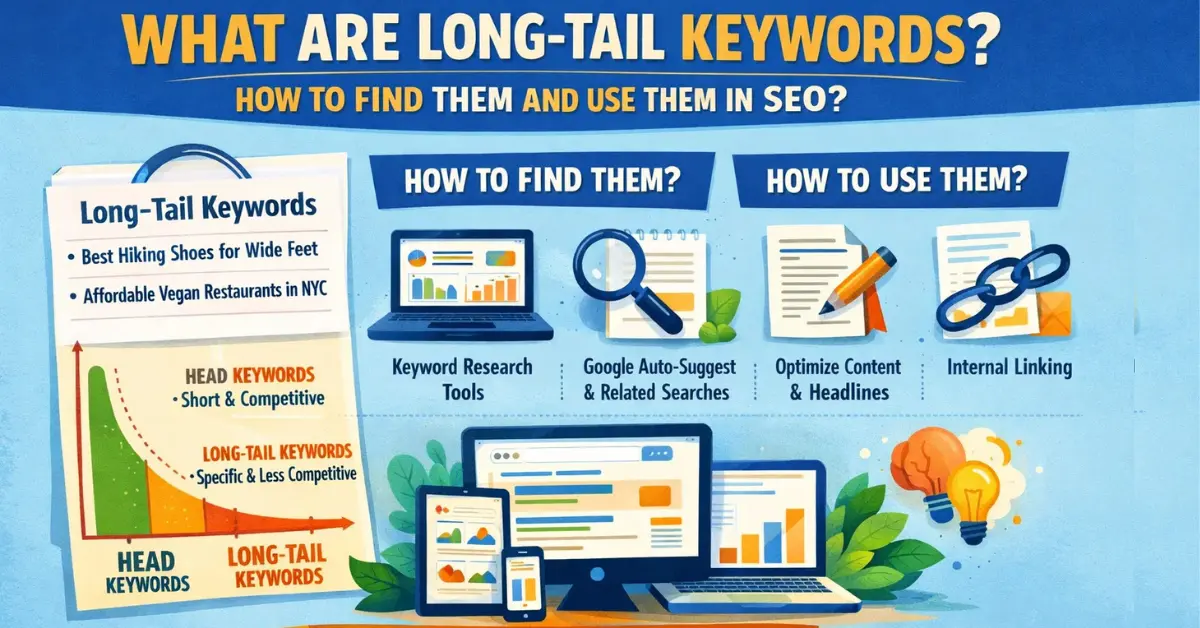
The competitiveness of a keyword greatly affects ranking speed. Highly competitive keywords like “digital marketing” may take years to rank, while long-tail keywords such as “digital marketing tips for small bakeries” can rank faster because fewer sites target them. Focus on long-tail keywords that match user intent. They not only rank faster but also attract more qualified traffic.
4. Backlinks: Number and Quality of Referring Domains
Backlinks remain one of Google’s strongest ranking signals. The more high-quality sites that link to your content, the faster it can climb search results. However, quality matters more than quantity. Links from authoritative domains (e.g., news outlets, universities, industry leaders) carry more weight than dozens of low-quality links. Backlinks act as endorsements of your authority. When trusted sites reference your content, it signals to Google that your page is credible.
Example: A recipe blog featured in a popular food magazine will rank faster than one with backlinks only from small, unrelated sites.
5. Technical SEO: Site Speed, Mobile-Friendliness, Crawlability
Even the best content struggles to rank if technical SEO is poor. Google prioritizes websites that load quickly, are mobile-friendly, and easy to crawl.
- Site Speed: Slow-loading pages increase bounce rates.
- Mobile-Friendliness: With most searches happening on mobile, responsive design is essential.
- Crawlability: Proper indexing, clean URLs, and structured data help search engines understand your site.
Example: A blog that compresses images and uses responsive design will rank faster than one with slow, cluttered pages.
6. User Engagement: Bounce Rate, Dwell Time, CTR
Google increasingly considers how users interact with your content. If visitors click your page and leave immediately (high bounce rate), it signals poor relevance. Longer dwell time and higher click-through rates (CTR) indicate that users find your content valuable. Create engaging, trustworthy content that keeps readers on the page. Use visuals, clear formatting, and actionable insights.
Example: A post with interactive infographics and clear headings will keep readers engaged longer than a plain text article.
Ranking speed depends on a combination of trust signals (domain authority, backlinks), content quality, technical performance, and user engagement. By consistently producing authoritative, well-researched content, optimizing technical SEO, and earning credible backlinks, you build the EEAT foundation that Google values.
TYPICAL TIMELINES FOR RANKING
One of the most common questions in SEO is: “How long does it take to rank on the first page of Google?” The honest answer is that there is no fixed timeline. Ranking speed depends on multiple factors such as keyword type, domain authority, industry competitiveness, and the overall quality of your SEO strategy. To set realistic expectations, let’s break down the typical timelines and the variables that influence them, while keeping in mind Google’s emphasis on Expertise, Experience, Authoritativeness, and Trustworthiness (EEAT).
Short-Tail vs. Long-Tail Keywords
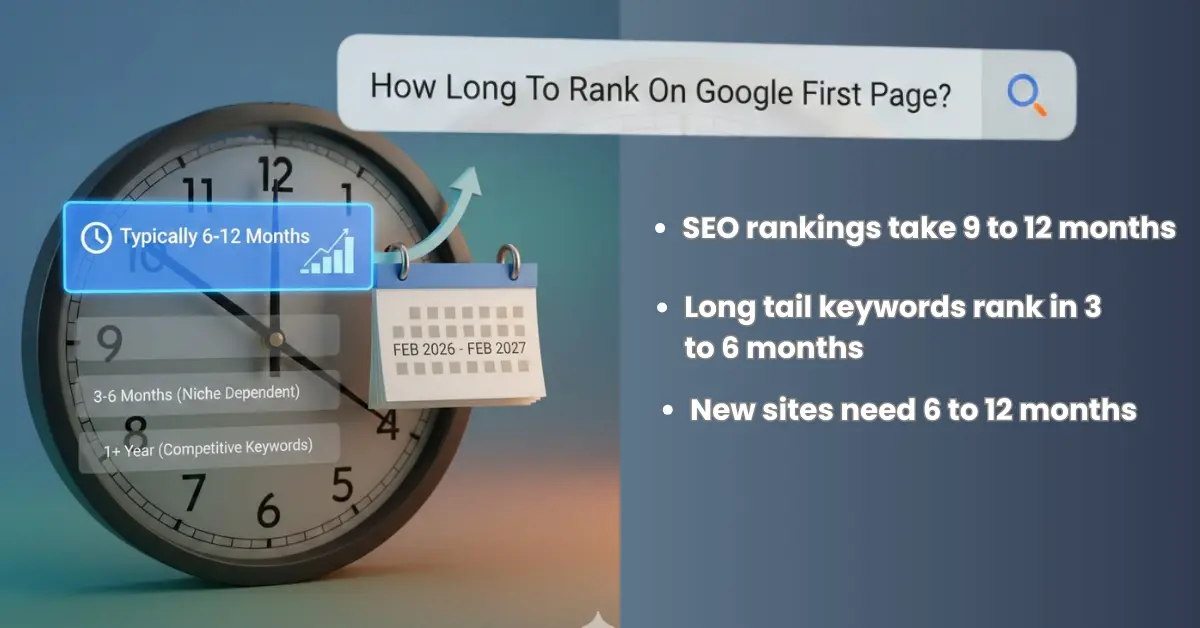
Short-tail keywords (e.g., “cakes,” “digital marketing”) are broad, highly competitive, and often dominated by established websites. Ranking for these terms can take 12 months or more, especially for new sites. Long-tail keywords (e.g., “easy vegan birthday cake recipe” or “digital marketing tips for small bakeries”) are more specific, less competitive, and closely aligned with user intent. These can often rank within 3–6 months if the content is high-quality, relevant, and optimized.
EEAT Connection: Long-tail content allows you to demonstrate expertise by addressing niche topics in depth, which builds trust and authority faster.
New Websites vs. Established Domains
Domain age and authority play a huge role. Established sites with a history of publishing valuable content and earning backlinks can rank for new keywords relatively quickly – sometimes within weeks. In contrast, new websites often face a “sandbox effect,” where Google takes time to evaluate their credibility. For new domains, expect 6–12 months before seeing significant rankings, even with consistent optimization. New sites must prove their trustworthiness by consistently publishing accurate, well-researched content and earning authoritative backlinks.
Industry Differences
Not all industries are equal in SEO competitiveness. Highly regulated or competitive niches like finance, health, and legal services often take longer to rank because Google applies stricter standards to ensure accuracy and trustworthiness. Lifestyle niches such as food, travel, or hobbies may see faster results since competition is less intense and EEAT requirements are lower.
Example: A finance blog targeting “best retirement investment strategies” may take over a year to rank due to high competition and strict EEAT standards. Meanwhile, a lifestyle blog targeting “easy vegan cakes” could achieve page-one visibility in 3–6 months with strong optimization.
Data from SEO Studies
Several SEO studies provide benchmarks for ranking timelines:
- Ahrefs found that only 22% of pages published rank in the top 10 within a year, and most of those belong to established domains.
- SEMrush reports that long-form, optimized content can start ranking within 3–6 months, while highly competitive keywords may take 12+ months.
- Industry consensus suggests that with consistent SEO efforts, most websites begin to see measurable improvements in 4–6 months, but achieving stable first-page rankings often requires 9–12 months of sustained work.
Practical Example
Imagine two blogs:
- Blog A (new domain): Publishes a 500-word post on “cakes.” With little authority and a highly competitive keyword, it may take over a year to rank, if at all.
- Blog B (established domain): Publishes a 2,000-word post on “easy vegan birthday cake recipe,” optimized with visuals, internal links, and authoritative references. Within 4 months, it begins ranking on page one for long-tail queries, driving steady traffic.
Typical timelines for ranking depend on keyword type, domain authority, industry competitiveness, and SEO execution. Short-tail keywords and new websites often require 12+ months, while long-tail keywords and established domains may achieve results in 3–6 months. Industries with strict EEAT requirements, like finance or health, naturally take longer.
The key takeaway: SEO is a long-term investment. By consistently producing authoritative, trustworthy content, building backlinks, and optimizing technical SEO, you can accelerate ranking speed – but patience and persistence are essential.
COMMON MISCONCEPTIONS ABOUT RANKING SPEED
When people begin their SEO journey, one of the biggest frustrations is the expectation of instant results. Many misconceptions circulate about how quickly a website can reach Google’s first page. Let’s clear up the most common myths and set realistic expectations, while grounding the discussion in Expertise, Experience, Authoritativeness, and Trustworthiness (EEAT).
Myth 1: “You Can Rank Overnight”
Some believe that publishing a blog post today means it will appear on page one tomorrow. In reality, Google’s algorithms need time to crawl, index, and evaluate your content. Even with perfect optimization, ranking typically takes months, not days. Quick wins may occur for very low-competition keywords, but sustainable rankings require consistent effort and authority building.
Myth 2: Paid Ads Guarantee Organic Rankings
Running Google Ads can increase visibility, but it does not directly influence organic rankings. Paid and organic search are separate systems. Ads can drive traffic while your SEO strategy matures, but they won’t shortcut the process of building trust and authority in Google’s eyes. Organic rankings depend on demonstrating expertise and credibility, not on advertising spend.
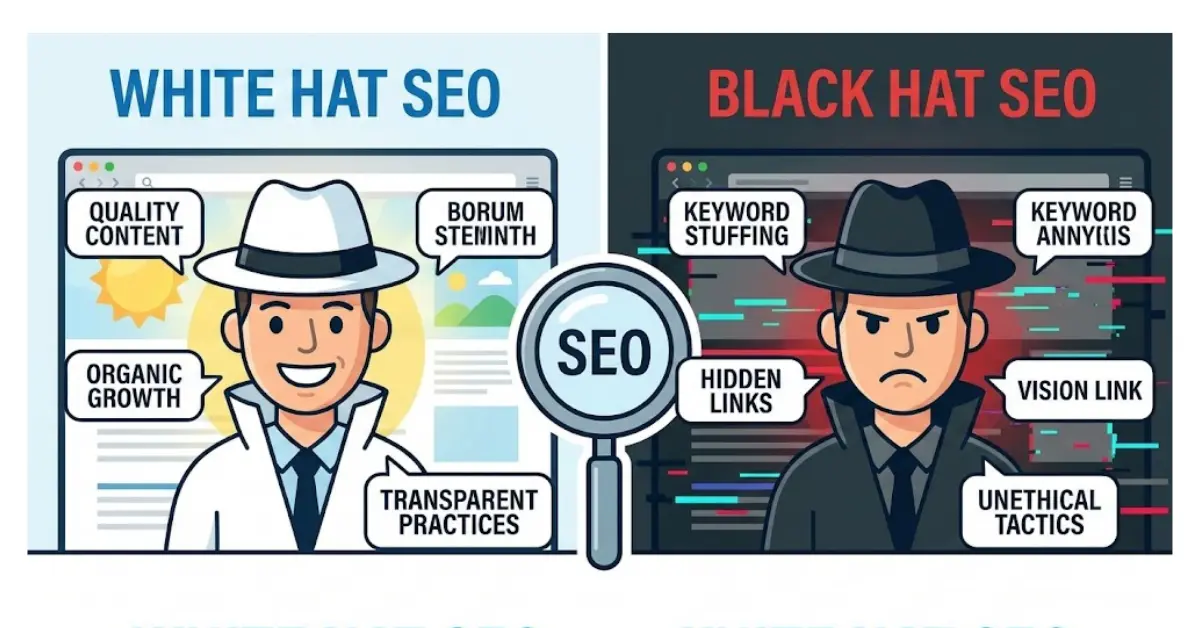
Myth 3: Keyword Stuffing Speeds Up Ranking
Repeating a keyword excessively used to work decades ago, but today it harms both user experience and SEO. Google’s algorithms prioritize quality, relevance, and natural language. Over-optimized content can trigger penalties. Instead, focus on semantic keywords, related topics, and comprehensive coverage of the subject. For example, a post that naturally explains “easy vegan cakes” with tips, FAQs, and nutritional insights will rank faster than one that awkwardly repeats the phrase 50 times.
Myth 4: All Industries Rank at the Same Speed
Ranking timelines vary by niche. Highly regulated industries like finance or health require stronger EEAT signals and often take longer to rank. Lifestyle niches such as food or travel may see quicker results because competition is less strict. For example, a finance blog targeting “best retirement strategies” may take a year or more to rank, while a food blog targeting “easy vegan birthday cakes” could see results in 3–6 months.
Myth 5: Once You Rank, You Stay There Forever
SEO is dynamic. Competitors publish new content, algorithms evolve, and user behavior changes. Even if you reach page one, you must continue updating and optimizing to maintain your position. Regularly refreshing content with accurate data and expert insights signals ongoing trustworthiness.
Ranking on Google’s first page is not about shortcuts or myths and it’s about building authority, trust, and relevance over time. By avoiding these misconceptions and focusing on EEAT-driven strategies, you’ll set realistic expectations and achieve sustainable SEO success.
STRATEGIES TO RANK FASTER ON GOOGLE FIRST PAGE
Ranking on the first page of Google takes time, but there are proven strategies that can help accelerate the process. While there are no shortcuts to sustainable SEO success, applying the right techniques consistently can shorten timelines and improve your chances of reaching page one. Importantly, these strategies align with Google’s emphasis on Expertise, Experience, Authoritativeness, and Trustworthiness (EEAT).
1. Focus on Long-Tail Keywords
Targeting broad, competitive keywords like “digital marketing” or “cakes” can take years. Instead, prioritize long-tail keywords that are specific and intent-driven, such as “easy vegan birthday cake recipe” or “digital marketing tips for small bakeries.” These terms are less competitive, easier to rank for, and often attract more qualified traffic. Long-tail content allows you to demonstrate expertise in niche areas, building trust faster.
2. Publish High-Quality, Optimized Content
Google rewards content that is comprehensive, relevant, and unique. Aim for long-form content (1,500+ words) that covers a topic in depth, supported by credible sources and expert insights. Use clear headings, bullet points, and visuals to improve readability. For example, a detailed guide on “Top Cake Trends in 2026” with expert commentary, images, and FAQs will outperform a short, generic post.
3. Build Authoritative Backlinks
Backlinks remain one of the strongest ranking signals. Focus on earning links from reputable sites in your industry. Guest posting, digital PR, and creating shareable resources (like infographics or research studies) are effective ways to attract backlinks. Backlinks act as endorsements of your authority. When trusted sites reference your content, Google sees it as more credible.
4. Improve Technical SEO
Even the best content won’t rank if your site is slow or difficult to navigate. Optimize site speed, ensure mobile-friendliness, and fix crawl errors. Use structured data (schema markup) to help Google understand your content. Google research shows 53% of mobile users leave a site if it takes longer than 3 seconds to load. Compressing images and enabling caching can significantly improve load times.
5. Refresh and Update Old Content
Google favours fresh, updated content. Regularly revisit older posts to add new insights, update statistics, and improve formatting. For example, a blog post on “SEO Trends in 2022” can be updated to “SEO Trends in 2026,” incorporating current data and examples to regain rankings. Updating content shows ongoing expertise and commitment to accuracy.
6. Strengthen Internal Linking
Internal links guide users to related content and help search engines crawl your site more effectively. They also distribute authority across your pages. For example, in a post about “vegan cakes,” link to related articles like “gluten-free baking tips” or “healthy frosting recipes.” This builds topical authority and keeps readers engaged longer.
7. Enhance User Engagement
Google increasingly values how users interact with your content. Improve CTR (click-through rate) with compelling meta titles and descriptions, reduce bounce rates with engaging introductions, and increase dwell time with visuals and interactive elements. Content that demonstrates expertise and provides genuine value naturally keeps users engaged.
Ranking faster on Google requires a strategic blend of keyword targeting, content quality, backlink building, technical optimization, and user engagement. While you can’t bypass the time it takes for Google to evaluate your site, you can accelerate progress by consistently applying these EEAT-driven strategies.
Think of SEO as building a reputation: the more you demonstrate expertise, authority, and trustworthiness, the quicker Google will reward you with visibility.
CASE STUDY / EXAMPLE
To better understand how long it takes to rank on Google’s first page, let’s look at two contrasting case studies. These examples highlight the role of keyword competition, domain authority, and EEAT-driven strategies in determining ranking speed.
Case Study A: Ranking in 4 Months with Long-Tail Keywords
A lifestyle blog focused on plant-based recipes published a detailed post titled “Easy Vegan Birthday Cake Recipe.” The blog had been active for three years, with moderate domain authority and a history of publishing consistent, high-quality content.
Strategy Used:
- Targeted a long-tail keyword with lower competition.
- Published a 2,000-word article including step-by-step instructions, nutritional insights, and expert baking tips.
- Added high-quality visuals (images and a short video tutorial).
- Built internal links to related posts like “Gluten-Free Baking Tips.”
- Earned backlinks from food bloggers and a local magazine.
Result: Within 4 months, the post ranked on page one for several variations of the keyword. Organic traffic grew steadily, dwell time increased, and conversions (newsletter sign-ups) doubled. This success was driven by EEAT principles — expertise in baking, authoritative backlinks, and trustworthy, user-friendly content.
Case Study B: Taking 12+ Months with Competitive Keywords
A new finance blog attempted to rank for the keyword “Best Retirement Investment Strategies.” Unlike lifestyle niches, finance is highly competitive and subject to stricter EEAT standards.
Challenges Faced:
- The domain was new, with little authority.
- The keyword was short-tail and highly competitive, dominated by established financial institutions.
- Content lacked depth initially, with only 800 words and minimal references.
Improvement Strategy:
- Expanded the article to 3,000 words, citing credible sources like government reports and financial studies.
- Added expert commentary from certified financial planners.
- Improved technical SEO with faster site speed and mobile optimization.
- Gradually built backlinks from niche finance blogs and forums.
Result: It took over 12 months to reach page one. The delay was due to the competitive nature of the keyword and the need to establish trustworthiness in a sensitive niche. However, once the blog demonstrated expertise and authority, rankings improved, and organic traffic began to grow.
Lessons Learned
- Long-tail keywords can rank faster (3–6 months) when paired with high-quality, relevant content.
- Competitive industries like finance or health require stronger EEAT signals and longer timelines (12+ months).
- Domain authority accelerates ranking; established sites have a clear advantage.
- Consistent optimization updating content, building backlinks, and improving user engagement and is essential for sustainable success.
These case studies show that ranking speed depends on keyword choice, industry, and the strength of your EEAT-driven strategy. While some niches allow faster wins, others demand patience and persistence. The key is to focus on building credibility and delivering genuine value to users – Google rewards that over time.
HOW TO TRACK PROGRESS
Ranking on Google’s first page is a long-term effort, and measuring progress is just as important as the optimization itself. Without tracking, you won’t know whether your strategies are working or where adjustments are needed. Monitoring performance ensures you stay aligned with Google’s expectations for Expertise, Experience, Authoritativeness, and Trustworthiness (EEAT) while steadily improving visibility.
Key Metrics to Monitor
- Keyword Rankings: Tracking keyword positions shows whether your target terms are moving closer to page one. Tools like Ahrefs, SEMrush, or Google Search Console provide ranking data over time. For example, if your blog post on “easy vegan birthday cake recipe” climbs from page three to page one in four months, that’s a clear indicator of progress.
- Organic Traffic: Organic traffic reflects how many visitors arrive via search engines. Growth here means your optimization efforts are paying off. Use Google Analytics to measure sessions, users, and traffic sources. A steady increase in organic traffic signals that your content is becoming more visible.
- Engagement Metrics: Metrics like bounce rate, dwell time, and pages per session reveal how users interact with your content. High engagement suggests your content is relevant and trustworthy. For example, adding visuals and FAQs to a recipe post may increase dwell time, showing users find it more valuable.
- Conversions: Ultimately, SEO success is measured by actions taken — sign-ups, purchases, or downloads. Track conversion rates to see if your optimized content is driving meaningful results. A clear call-to-action at the end of a blog post can significantly improve conversions.
- Backlinks: Monitor the number and quality of backlinks. Tools like Moz or Ahrefs show which sites are linking to your content. Backlinks from authoritative domains strengthen your credibility and accelerate rankings.
Tools for Tracking Progress
- Google Search Console: Impressions, clicks, and keyword performance.
- Google Analytics: Traffic, engagement, and conversions.
- Ahrefs / SEMrush: Keyword rankings, backlink analysis, competitor insights.
- Hotjar: Heatmaps and session recordings to visualize user behavior.
Practical Example
Suppose you update a 2022 blog post on “Top Cake Trends” to reflect 2026. After optimization, you track progress:
- Keyword rankings improve from page two to page one.
- Organic traffic doubles within six months.
- Bounce rate drops as readers spend more time on the updated content.
- Backlinks increase after food magazines reference your refreshed post.
These metrics confirm that your optimization efforts are successful and guide future strategy.
Tracking progress ensures you’re not just publishing blindly. By monitoring rankings, traffic, engagement, conversions, and backlinks, you gain a clear picture of your SEO journey. More importantly, these insights help refine your approach, ensuring your content continues to demonstrate EEAT and achieve sustainable first-page visibility.
CONCLUSION
Ranking on the first page of Google is one of the most sought-after achievements in digital marketing, but it’s also one of the most misunderstood. Many expect instant results, yet the reality is that SEO is a long-term investment built on patience, consistency, and trust.
Throughout this guide, we’ve explored the key elements that influence ranking speed: domain authority, content quality, keyword competition, backlinks, technical SEO, and user engagement. We’ve seen how timelines vary – from 3–6 months for long-tail keywords in lifestyle niches to 12+ months for competitive industries like finance or health. We’ve also addressed common misconceptions, such as the myth of overnight rankings or the belief that paid ads guarantee organic success.
The central message is clear: success in SEO requires a foundation of Expertise, Experience, Authoritativeness, and Trustworthiness (EEAT). Google rewards content that demonstrates genuine expertise, is backed by credible sources, and provides real value to users. Whether you’re publishing a recipe blog or a financial guide, the principles remain the same, which are create content that informs, engages, and builds trust.
It’s also important to remember that ranking is not a one-time milestone. Even after reaching page one, you must continue updating content, monitoring performance, and adapting to algorithm changes. SEO is dynamic, and maintaining visibility requires ongoing effort.So, how long does it take to rank on the first page of Google? The answer depends on your niche, competition, and strategy. But with consistent optimization, a focus on EEAT, and a commitment to delivering value, you can accelerate the journey and achieve sustainable results.
Final Call-to-Action: Start today. Audit your content, refine your keyword strategy, build authoritative backlinks, and track progress. The sooner you begin, the sooner you’ll see your site climb toward that coveted first page and the long-term rewards of visibility, credibility, and conversions will follow.
FAQ’s
1. How long does it take to rank on the first page of Google?
It typically takes 3 to 6 months to rank on the first page for low-competition keywords.
2. Can a new website rank on Google quickly?
Yes, new websites can rank within 6 to 12 months with strong content and SEO.
3. What is the fastest way to rank on Google?
Publishing high-quality content, targeting low-competition keywords, and earning backlinks is the fastest method.
4. Does keyword competition affect ranking time?
Yes, higher competition keywords can take 6 to 18 months or more to rank.
5. How long does SEO take to show results?
SEO usually shows noticeable results within 3 to 4 months.
6. Can you rank on Google in 30 days?
Yes, but only for very low-competition or long-tail keywords.
7. Does domain age affect Google rankings?
Yes, older domains generally rank faster due to established authority.
8. How important are backlinks for ranking speed?
Backlinks significantly accelerate ranking by improving trust and authority.
9. Does content quality impact ranking time?
Yes, high-quality and helpful content ranks faster and more consistently.
10. How long does it take to rank without backlinks?
It can take 6 to 12 months or longer without backlinks.