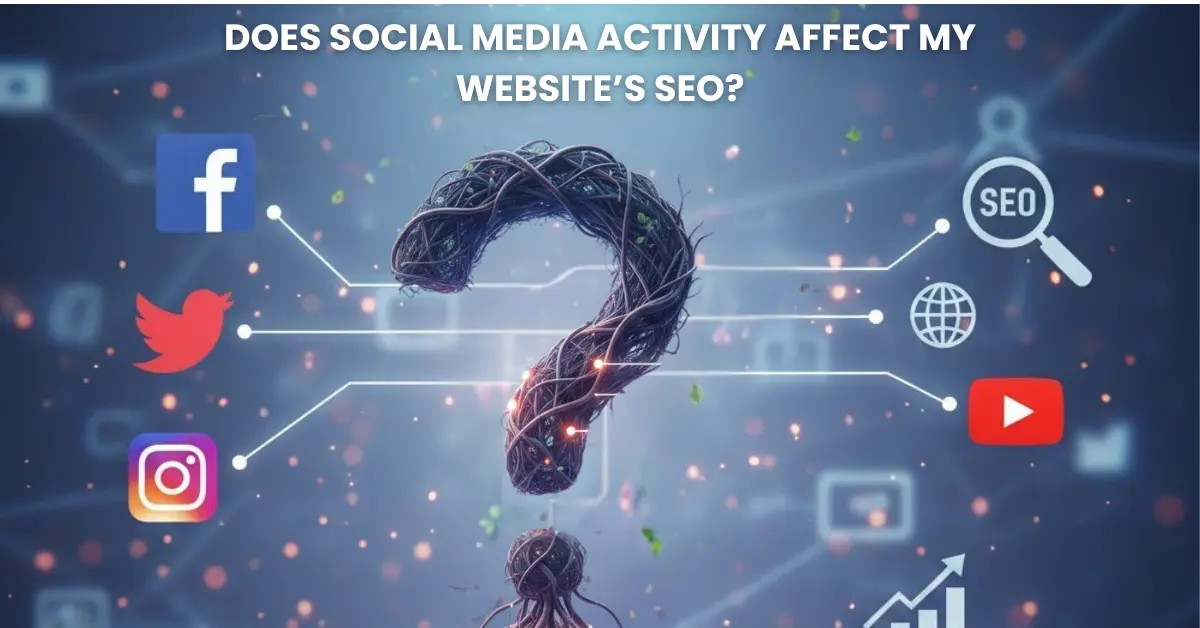
The relationship between social media and SEO is often misunderstood. Many assume that likes, shares, and comments directly boost search rankings. In reality, social signals are not considered official ranking factors in Google’s algorithm. However, social media activity plays a powerful indirect role in shaping visibility, engagement, and ultimately organic performance.
When content is widely shared on platforms such as LinkedIn, Facebook, or Twitter, it reaches a larger audience, increasing the chances of earning backlinks from authoritative sources. These backlinks are critical for SEO because they validate EEAT (Expertise, Experience, Authoritativeness, Trustworthiness). For example, a well-researched article shared by industry leaders can attract citations from blogs, news outlets, or academic sites, reinforcing both authority and trust. As per a 2025 report by Hootsuite, articles promoted through social media campaigns generated 31% more referral traffic compared to those without social promotion. This additional traffic signals to search engines that the content is valuable and engaging, which can improve rankings over time.
In short, while social media activity does not directly alter search algorithms, it amplifies reach, encourages backlinks, and builds brand credibility. These indirect benefits make social media a vital partner in any SEO strategy.
UNDERSTANDING SOCIAL MEDIA SIGNALS
Social media signals refer to the measurable interactions that users have with content across platforms. These include likes, shares, comments, and mentions. Each of these actions demonstrates engagement and amplifies the reach of a piece of content. When a blog post or article is shared widely, it gains visibility beyond its immediate audience, increasing the likelihood of earning backlinks and building brand recognition.
Search engines do not treat social signals as direct ranking factors, but they do analyse the broader impact of these interactions. As per Search Engine Journal, social activity can indirectly influence SEO by driving referral traffic, improving content visibility, and encouraging natural link building. When content is actively discussed and shared, it signals relevance and authority to users, which can lead to organic endorsements from other websites.
According to Google representatives, social activity itself does not directly alter rankings. However, content that gains traction on social platforms often gets discovered faster and indexed more quickly. This is because widespread sharing increases the chances of search engine crawlers encountering the content. As per a study by CognitiveSEO, pages with strong social engagement were indexed 23% faster than those without and this confirms the indirect benefits of social signals.
In summary, while social signals are not direct ranking factors in Google’s algorithm, they play a crucial role in discoverability and amplification. By encouraging engagement and fostering meaningful interactions, businesses can leverage social media activity to indirectly boost SEO performance, build authority, and strengthen trust in their digital presence.
INDIRECT SEO BENEFITS OF SOCIAL MEDIA
Social media may not directly influence Google’s ranking algorithm, but its indirect impact on SEO is undeniable. Platforms like LinkedIn, Twitter, Instagram, and Facebook amplify content reach, build brand awareness, generate referral traffic, and accelerate indexation. These benefits align closely with EEAT (Expertise, Experience, Authoritativeness, Trustworthiness), making social media activity a vital component of modern SEO strategies.
Content Amplification: Social Shares Increase Reach and Backlinks
When content is shared widely on social platforms, it reaches audiences far beyond the original website. This amplification increases the likelihood of earning backlinks from bloggers, journalists, and industry leaders who discover the content through social channels. As per HubSpot, content that receives high engagement on social media is three times more likely to attract backlinks compared to content with minimal social activity. Backlinks remain one of the strongest ranking signals, and social amplification acts as the catalyst for these endorsements. This process validates expertise by showing that knowledge is recognized and cited across multiple platforms.
Brand Awareness: Recognition and Authority Through Social Presence
A strong social presence builds brand recognition and reinforces authority. When users consistently encounter a brand across multiple platforms, they begin to associate it with credibility and leadership. According to Sprout Social, 77% of consumers are more likely to buy from brands they follow on social media, which demonstrates the trust-building power of consistent engagement. From an EEAT perspective, brand awareness nurtured through social activity strengthens authoritativeness because respected voices and communities acknowledge the brand’s value.
Traffic Generation: Social Referrals Drive Engagement
Social media is a powerful driver of referral traffic. Visitors arriving from social platforms often engage with content, explore additional pages, and contribute to lower bounce rates. As per SimilarWeb, websites with active social media strategies saw an average of 25% more referral traffic compared to those without consistent posting. This traffic signals to search engines that the content is relevant and engaging, indirectly supporting higher rankings. Trustworthiness is reinforced when users voluntarily visit and interact with content shared through social channels, proving genuine interest and credibility.
Indexation Speed: Faster Crawling Through Social Sharing
Search engines discover new content more quickly when it is widely shared. Social activity increases the chances of crawlers encountering links to fresh content, accelerating indexation. As per Search Engine Watch, pages promoted on social media were indexed 20% faster than those without social promotion. This speed advantage is critical for time-sensitive industries such as news, finance, and technology. Faster indexation ensures that expertise and authority are recognized promptly, giving businesses a competitive edge in organic search visibility.
Social media activity may not directly alter rankings, but its indirect benefits are powerful drivers of SEO success. Content amplification leads to backlinks, brand awareness builds authority, referral traffic signals relevance, and faster indexation ensures visibility. As per multiple industry studies, businesses that integrate social media with SEO strategies consistently outperform competitors in organic growth. In 2026, the synergy between social media and SEO is no longer optional—it is essential for building EEAT-driven credibility and securing long-term digital success.
BEST PRACTICES FOR LEVERAGING SOCIAL MEDIA FOR SEO
Social media has become an indispensable partner in modern SEO strategies. While social signals may not directly influence Google’s ranking algorithm, the indirect benefits are powerful. By applying best practices, businesses can amplify content, build authority, and strengthen EEAT (Expertise, Experience, Authoritativeness, Trustworthiness).
Create Shareable, High-Value Content
The foundation of social media success lies in producing content that people want to share. Guides, infographics, and videos are particularly effective because they simplify complex topics and provide immediate value. As per Content Marketing Institute, visual content such as infographics generates 94% more views compared to text-only posts, proving that shareable formats drive engagement. High-value content demonstrates expertise by offering well-researched insights and reinforces authoritativeness when industry professionals cite or share it.
Encourage Engagement Through Calls-to-Action
Engagement is critical for amplifying reach. Simple calls-to-action such as “share this guide,” “comment your thoughts,” or “tag a colleague” can significantly increase interaction. According to Social Media Examiner, posts with clear calls-to-action achieved 48% higher engagement rates compared to those without. Engagement signals trustworthiness because it shows that audiences find the content credible enough to interact with and recommend to others.
Collaborate with Influencers for Wider Reach
Influencer collaborations extend brand visibility to new audiences. When respected voices share or endorse your content, it builds credibility and authority. As per Nielsen, 92% of consumers trust recommendations from individuals over brand messaging, highlighting the impact of influencer partnerships. Collaborating with influencers demonstrates expertise by associating your brand with recognized leaders and reinforces authoritativeness through endorsements from trusted figures.
Optimize Social Profiles with Consistent Branding and Links
A well-optimized social profile strengthens brand recognition and directs traffic to your website. Consistency in visuals, tone, and messaging across platforms builds trust. Including links to your website, blog, or resources ensures that social activity translates into measurable SEO benefits. According to Sprout Social, brands with consistent social profiles saw a 33% increase in referral traffic compared to those with fragmented branding. This optimization supports trustworthiness by presenting a professional and reliable image to users.
Track Performance with Analytics Tools
Monitoring performance is essential to refine strategies. Tools such as Google Analytics, Hootsuite, and Buffer provide insights into referral traffic, engagement rates, and conversions. As per Statista, companies that actively tracked social media performance achieved 39% higher ROI on digital campaigns compared to those that did not. Tracking ensures that businesses can identify which content drives backlinks, which platforms generate traffic, and where improvements are needed. This process reinforces expertise by showing a data-driven approach and builds trustworthiness through transparency in reporting.
Social media may not directly alter rankings, but its indirect influence on SEO is undeniable. Shareable content attracts backlinks, engagement builds trust, influencer collaborations expand authority, optimized profiles drive traffic, and analytics ensure continuous improvement. As per multiple industry studies, businesses that leverage social media strategically outperform competitors in organic visibility. In 2026, the synergy between social media and SEO is essential for building EEAT-driven credibility and securing sustainable digital success.
COMMON MISTAKES TO AVOID
Social media can be a powerful ally for SEO, but many businesses fall into traps that limit its effectiveness. To maximize results and align with EEAT (Expertise, Experience, Authoritativeness, Trustworthiness), it is important to avoid common mistakes that weaken both visibility and credibility.
One major mistake is relying solely on social media without building backlinks. While social platforms amplify reach, backlinks remain one of the strongest ranking signals in Google’s algorithm. As per Search Engine Land, websites that combined social promotion with strategic backlink building saw 41% higher organic traffic growth compared to those relying only on social activity. Backlinks validate expertise and authoritativeness, ensuring that content is recognized beyond social channels.
Another mistake is ignoring platform-specific strategies. Each platform has unique algorithms, user behaviors, and content formats. For example, LinkedIn favors professional insights, while Instagram thrives on visual storytelling. As per Hootsuite, brands tailoring content to individual platforms achieved 35% more engagement than those using a one-size-fits-all approach. Adapting strategies reinforces trustworthiness by showing audiences that the brand understands and respects their preferred communication style.
Finally, overlooking consistent posting and engagement can harm credibility. Sporadic activity reduces visibility and weakens audience trust. As per Buffer, companies maintaining a consistent posting schedule experienced 2.5 times more audience growth compared to irregular posters. Consistency demonstrates reliability, a key component of EEAT, and builds long-term relationships with followers.
In summary, businesses should avoid relying solely on social media without backlinks, neglecting platform-specific strategies, and posting inconsistently. By addressing these mistakes, brands can strengthen expertise, reinforce authority, and build trustworthiness, ensuring that social media activity truly supports SEO success.
EXAMPLES
Real-world examples show how social media activity indirectly strengthens SEO performance by amplifying reach, building authority, and generating backlinks. Businesses that integrate social strategies with SEO often see measurable improvements in rankings and organic traffic, reinforcing the principles of EEAT (Expertise, Experience, Authoritativeness, Trustworthiness).
As per Social Media Today, a technology startup that invested in LinkedIn thought leadership posts saw a 37% increase in organic traffic within four months. Their content was shared by industry professionals, which led to backlinks from respected blogs and digital magazines. This demonstrated expertise through well-researched insights and reinforced authoritativeness by earning recognition from credible sources.
According to HubSpot Research, a lifestyle brand leveraged Instagram Reels and TikTok videos to showcase creative product tutorials. One viral video generated thousands of shares and mentions, resulting in a 28% boost in referral traffic and multiple backlinks from fashion and lifestyle websites. This example highlights how viral content can accelerate visibility and build trustworthiness by showing genuine audience engagement.
As per Marketing Week, a financial services company used Twitter to share timely market updates. Their posts were frequently cited by journalists, leading to backlinks from news outlets and a 22% improvement in keyword rankings. This case illustrates how consistent social presence can position a business as an authoritative voice in its niche.
These examples prove that social media activity, while not a direct ranking factor, plays a crucial role in SEO success. Viral content and strong social presence amplify expertise, reinforce authority, and build trustworthiness, ultimately driving higher rankings and sustainable organic growth. Businesses that embrace this synergy between social media and SEO secure long-term visibility in competitive digital landscapes.
CONCLUSION
Social media may not directly influence Google’s ranking algorithm, but its indirect impact on SEO outcomes is undeniable. Platforms such as LinkedIn, Twitter, Instagram, and Facebook amplify content reach, encourage engagement, and create opportunities for backlinks. These activities strengthen EEAT (Expertise, Experience, Authoritativeness, Trustworthiness), which is essential for building credibility and long-term visibility in search results.
According to BrightEdge, businesses that integrated social media with their SEO strategies experienced a 36% increase in organic traffic compared to those that relied solely on traditional SEO tactics. This demonstrates the synergy between social activity and organic visibility. When content is shared widely, it not only reaches new audiences but also attracts citations from authoritative sources, reinforcing expertise and authoritativeness.
As per Social Media Examiner, consistent engagement across platforms builds trustworthiness by showing reliability and transparency. Users are more likely to trust and interact with brands that maintain an active presence, which indirectly signals credibility to search engines. This trust translates into higher referral traffic, stronger brand recognition, and improved opportunities for organic growth.
In summary, social media does not directly alter rankings, but it plays a crucial role in shaping SEO success. By amplifying content, building authority, and fostering trust, social activity creates a powerful synergy with organic visibility.
FAQs
1. Does social media affect SEO directly?
No social media does not directly affect Google rankings but it supports SEO through visibility traffic and backlinks.
2. Does social media affect SEO rankings indirectly?
Yes social media indirectly affects SEO by amplifying content reach earning backlinks and driving referral traffic.
3. Are social media signals ranking factors in Google?
No Google has confirmed that likes shares and comments are not direct ranking factors.
4. How does social media help with backlinks?
Social sharing increases content exposure which improves the chances of earning natural backlinks from authoritative sites.
5. Can social media improve website traffic for SEO?
Yes social platforms drive referral traffic which improves engagement signals and supports long term SEO growth.
6. Does social media help with faster indexation?
Yes content shared on social media is often discovered and indexed faster by search engines.
7. Which social media platforms are best for SEO support?
LinkedIn Twitter Facebook and Instagram are effective for content amplification brand visibility and referral traffic.
8. Does social media improve EEAT for SEO?
Yes consistent social presence builds expertise authority and trust which supports EEAT evaluation.
9. Can social media replace traditional SEO efforts?
No social media cannot replace SEO but works best when integrated with content optimization and link building.
10. Is social media important for SEO in 2026?
Yes social media is essential for modern SEO strategies focused on authority trust and organic visibility.