You can publish the best article on the internet and still get ignored on Google.
Why?
Because users decide whether to click based on what they see on the search engine results page SERP. That decision often happens in less than three seconds. Your meta description plays a major role in that moment.
If you want to improve organic CTR, build search trust, and follow Google’s ranking guidelines properly, you must understand how meta descriptions actually work. This guide explains everything clearly, using verified information from trusted sources like Google Search Central and industry leaders such as Moz and Ahrefs.
Let us break it down properly.
What Is a Meta Description
A meta description is an HTML attribute that provides a short summary of a webpage.
It looks like this in HTML:
<meta name=”description” content=”Learn how to write a meta description that increases CTR with proven SEO techniques and real examples.”>
Users do not see this code. They see the snippet that appears under your title tag in Google search results.
According to Google Search Central documentation, meta descriptions do not directly influence rankings. However, they influence click through rate, and higher engagement can indirectly support performance signals.
In simple words:
Meta description does not rank you.
But it convinces users to click.
And clicks matter.
Why Organic Click Through Rate Matters
Organic click through rate refers to the percentage of users who click your result after seeing it in the SERP.
If 100 people see your page and 10 click, your CTR equals 10 percent.
Google confirms that it uses various signals to understand user satisfaction. While Google does not publicly confirm CTR as a direct ranking factor, industry research consistently shows a correlation between higher CTR and stronger visibility.
More importantly, improving organic CTR means:
- More traffic without increasing rankings
- Better ROI from existing positions
- Higher engagement
- Stronger brand authority
If you rank at position 3 but no one clicks, your ranking holds little value.
How Google Displays Meta Descriptions
Google does not always show the meta description you write.
In fact, Google rewrites meta descriptions when it believes another part of your page better matches user search intent.
According to Google Search Central documentation:
Google may generate a snippet from the page content if it finds that more relevant than the meta description provided.
This explains why you must align your meta description with user intent and page content.
If your description feels generic, stuffed with keywords, or unrelated to the query, Google will replace it.
How Google Selects Snippet Content Dynamically
Google does not randomly rewrite descriptions. It evaluates query relevance in real time.
If a user searches:
“meta description length 2026”
And your description does not mention length, Google may extract a paragraph from your article that includes that phrase.
This happens because Google tries to match the snippet to the exact search query.
Example:
Meta description:
“Learn how to write better meta descriptions for SEO.”
But your article contains:
“Meta description length in 2026 should stay within pixel limits.”
Google may display the second line instead.
This shows why semantic alignment matters.
Your description must include variations that match potential queries.
Why Google Rewrites Meta Descriptions
Google rewrites snippets for three main reasons:
- The description does not match the user query
- The description lacks relevant keywords
- The description feels misleading or vague
When Google rewrites your snippet, you lose control over messaging.
So your goal should not be to manipulate. Your goal should be to match intent precisely.
Additional Technical Reasons for Snippet Rewrites
Google also rewrites when:
- Your description duplicates other pages
- It exceeds pixel width limits
- It contains keyword stuffing
- It lacks the user’s query terms
- It appears promotional without context
Example of keyword stuffing:
“Best SEO services in India. Best SEO services in India. Best SEO services in India.”
Google will replace this with actual page content.
Example of weak generic description:
“Welcome to our website. Click here to learn more.”
No relevance. No value. Guaranteed rewrite.
Understanding User Search Intent
Before writing anything, ask:
What does the user actually want?
User search intent usually falls into four categories:
- Informational
- Navigational
- Transactional
- Commercial investigation
For the topic “How to write a meta description that increases CTR,” the intent is informational with practical guidance.
Your meta description must reflect that.
If you promise “ultimate secrets” but deliver basics, users bounce. Google notices.
Intent alignment builds trust.
Applying Search Intent Practically
Let us apply this to different keyword types.
Keyword:
“How to write a meta description that increases CTR”
Correct meta description:
“Learn how to write a meta description that increases CTR using proven SEO techniques and real examples.”
Now compare with a transactional keyword:
“Meta description writing service”
Correct description:
“Professional meta description writing service that improves organic CTR and search visibility.”
Notice how tone changes based on intent.
This practical distinction strengthens your authority and demonstrates real application.
Meta Description Best Practices
Let us move into practical SEO meta description tips that follow Google guidelines.
1. Keep It Within Recommended Length
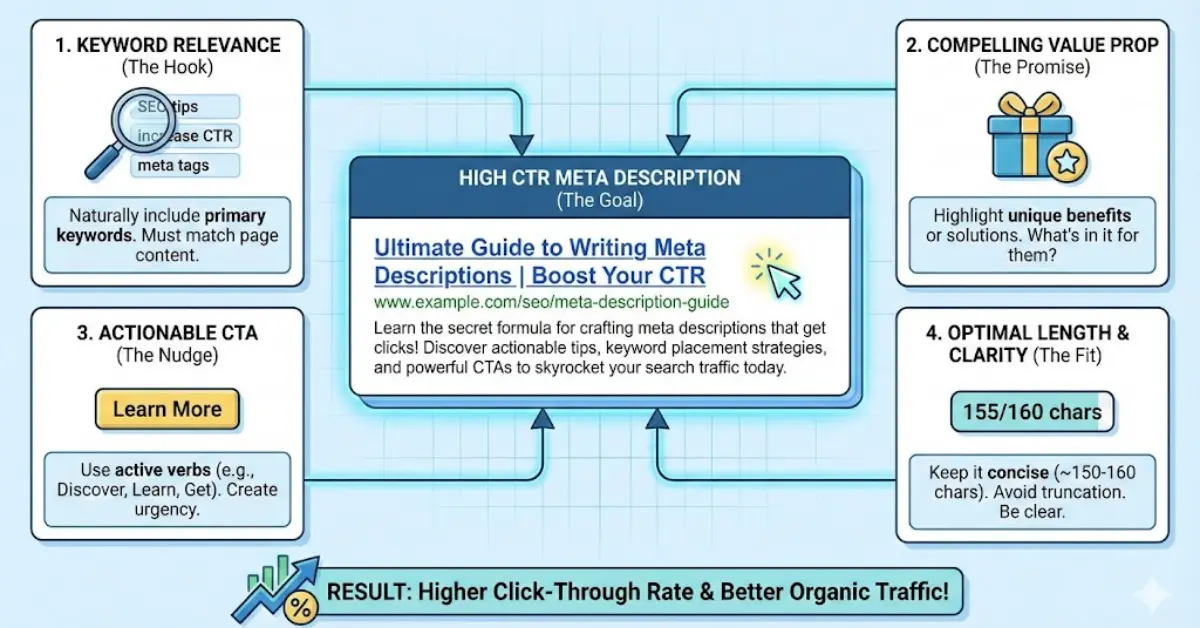
Google does not publish a fixed character limit. However, most snippets truncate around:
- 150 to 160 characters on desktop
- Slightly shorter on mobile
Focus on clarity instead of obsessing over exact characters.
Pixel Width Matters More Than Character Count
Google truncates snippets based on pixel width, not characters.
Wide letters such as W and M take more space.
Narrow letters such as i take less.
Two descriptions with 155 characters may display differently.
Example:
“Write powerful meta descriptions that increase CTR and drive more traffic from Google search results.”
May truncate earlier than:
“Write meta descriptions that increase CTR and improve SEO.”
Practical advice:
Front load important information in the first 120 characters.
2. Match the Page Content
Your description must summarize the page accurately.
Google recommends writing descriptions that:
- Inform users
- Reflect page content
- Avoid duplication
Never write a description that promises something your page does not deliver.
3. Include Primary Keyword Naturally
Include your main keyword naturally within the first part of the description.
For example:
“Learn how to write a meta description that increases CTR using proven SEO strategies and real examples.”
This helps reinforce relevance.
Do not force keywords repeatedly.
4. Add a Clear Value Proposition
Users need a reason to click.
Answer:
What will they gain?
Examples:
- Step by step framework
- Real world examples
- Data backed tips
- Practical checklist
Specific benefits outperform vague statements.
5. Use Power Words in SEO Carefully
Power words attract attention. Words like:
- Proven
- Effective
- Simple
- Actionable
- Practical
But do not exaggerate.
Avoid:
- Guaranteed ranking
- Secret trick
- Instant results
Google discourages misleading claims.
How to Write a Meta Description That Increases CTR
Now let us build a structured formula.
Step 1: Identify Core Query
Look at the exact search query.
For this topic:
How to write a meta description that increases CTR
Understand that users want:
- Process
- Examples
- Best practices
- Realistic expectations
Step 2: Summarize the Article in One Clear Sentence
If you cannot summarize your page in one sentence, rewrite your page first.
Example summary:
“This guide explains how to write a meta description that increases CTR using proven SEO techniques, real examples, and Google guidelines.”
Clear. Direct. Honest.
Step 3: Add Outcome Or Benefit
Attach outcome:
“…so you can improve organic CTR and attract more clicks from Google search.”
Now it connects value.
Step 4: Keep It Conversational But Professional
Users respond better to natural tone.
Avoid robotic tone like:
“Comprehensive guide providing extensive methodologies.”
Keep it human:
“Learn how to write compelling meta descriptions that drive more clicks from the search results.”
Step 5: Test and Refine
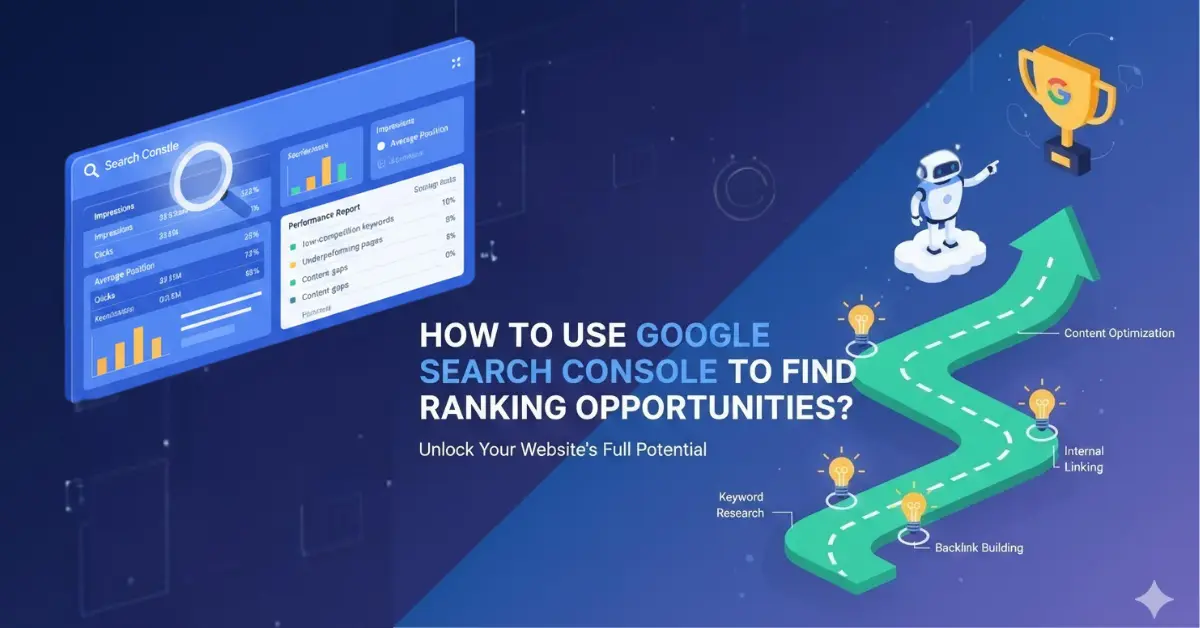
Use Google Search Console to analyze:
- Impressions
- Clicks
- CTR
If a page receives high impressions but low CTR, rewrite the description.
Data guides optimization.
Meta Description Examples That Convert
Let us compare weak versus strong examples.
Weak Example
“Meta description guide for SEO. Learn tips and tricks.”
This feels generic. No value. No clarity.
Strong Example
“Learn how to write a meta description that increases CTR with proven SEO strategies, real examples, and a simple optimization checklist.”
Clear benefit. Specific topic. Trust building.
Another example for eCommerce:
“Discover how to optimize meta descriptions for SEO and boost organic CTR with proven techniques and practical examples.”
Notice the structure:
- Primary topic
- Benefit
- Specific promise
No exaggeration. No fluff.
Meta Description Optimization Process
Optimization does not end after publishing.
Follow this workflow:
- Publish article with structured meta description
- Monitor CTR in Google Search Console
- Identify pages below average CTR for their position
- Rewrite descriptions to better match search intent
- Test again
Industry studies from tools like Ahrefs show that updating titles and descriptions can significantly impact click behavior, even without ranking changes.
Optimization requires iteration.
Improve Organic CTR Without Changing Rankings
You can improve organic CTR even if rankings stay the same.
Focus on:
- Clear benefit statements
- Strong call to action
- Intent alignment
- Structured snippet appearance
- Avoiding truncation
Think of your meta description as ad copy for organic search.
You compete against nine other results.
Why should someone choose yours?
Answer that in one or two sentences.
How to Optimize Meta Description for SEO
Let us summarize practical rules:
- Write unique descriptions for every page
- Avoid duplicate meta descriptions
- Reflect page content accurately
- Include relevant keywords naturally
- Focus on user intent
- Avoid keyword stuffing
- Avoid vague marketing claims
- Monitor performance using Search Console
Google specifically advises against stuffing keywords or creating generic descriptions across pages.
Unique descriptions help Google understand page differentiation.
The Role of the Search Engine Results Page SERP
Your meta description does not exist in isolation.
It appears alongside:
- Title tag
- URL
- Rich results
- Featured snippets
- Ads
Users scan vertically.
Modern SERPs Are Highly Competitive
Today you compete with:
- Featured snippets
- People Also Ask boxes
- Video results
- Ads
- AI generated summaries
If Google already answers the definition in a featured snippet, your meta description must offer something additional.
Instead of:
“What is a meta description? Learn here.”
Write:
“See real meta description examples that convert and increase organic CTR.”
Shift from definition to value.
This strategic differentiation improves CTR.
If your competitors use structured data or emotional hooks effectively, you must compete strategically.
Study the SERP manually.
Search your target keyword.
Observe:
- What type of language appears
- What questions users likely ask
- What tone competitors use
Then craft your snippet differently while staying truthful.
On Page SEO Checklist for Meta Descriptions
Here is a practical checklist you can use:
- Primary keyword included naturally
- Length within display limits
- Clear benefit mentioned
- Matches page intent
- No duplicate across site
- No exaggerated claims
- Call to action where appropriate
- Tested via SERP preview tool
- Performance monitored in Search Console
Use this checklist before publishing.
Common Mistakes That Hurt CTR
Even experienced SEO professionals make these mistakes.
1. Writing for Algorithms Instead of Humans
Meta descriptions target users, not bots.
Write for people.
2. Using Generic Statements
“Best guide online.”
Everyone says that. No one believes it.
3. Ignoring Search Intent
If someone searches “meta description examples that convert,” do not write a purely theoretical snippet.
4. Over Optimization
Stuffing keywords repeatedly reduces readability and may trigger snippet rewriting.
5. Ignoring Data
If your CTR remains low, do not assume ranking is the only issue.
Check your messaging.
The Psychology Behind High CTR
Human decision making often depends on clarity and relevance.
When users scan results, they look for:
- Exact phrase match
- Clear benefit
- Specific outcome
- Trustworthy tone
You do not need tricks.
You need clarity.
Add logic. Remove fluff.
Respect the reader’s time.
Why Specificity Increases Clicks
Compare:
“SEO meta description guide.”
Versus:
“Learn how to write a meta description that increases CTR with real examples and a simple optimization checklist.”
The second version wins because it:
- Matches query exactly
- Offers examples
- Promises structure
- Sounds actionable
Specific beats vague.
Clarity beats hype.
A Realistic Perspective on CTR Growth
Do not expect dramatic jumps overnight.
CTR depends on:
- Position
- SERP features
- Competition
- Search intent
- Brand familiarity
If you rank position 8, a perfect meta description will not magically outperform position 1.
But it can significantly improve performance relative to competitors in similar positions.
Focus on continuous improvement.
How to Measure Meta Description Success
Writing is only half the job. Measurement matters.
Use Google Search Console:
- Go to Performance report
- Filter by specific page
- Compare average position and CTR
- Identify pages with high impressions but low CTR
Example:
Page A
Position 3
CTR 4 percent
Page B
Position 3
CTR 9 percent
Page A likely needs snippet optimization.
Without measurement, optimization becomes guesswork.
Final Thoughts
Learning how to write a meta description that increases CTR is not about manipulation.
It is about clarity, relevance, and intent alignment.
Follow Google guidelines.
Avoid misleading claims.
Match your content with user expectations.
Monitor performance.
Refine continuously.
When you treat your meta description like strategic copy instead of an afterthought, you unlock more traffic from the same rankings.
And that feels much better than chasing position changes alone.
Because sometimes the easiest growth opportunity does not require ranking higher.
It requires writing better.
Frequently Asked Questions
1. Does a meta description affect Google rankings?
Meta descriptions do not directly affect Google rankings. Google has confirmed that they are not a ranking factor. However, a well written meta description can improve organic click through rate, which increases traffic and user engagement signals.
2. What is the ideal meta description length?
There is no fixed character limit, but most meta descriptions display between 150 and 160 characters on desktop. Google truncates snippets based on pixel width, not characters, so it is best to place the most important information within the first 120 characters.
3. Why does Google rewrite my meta description?
Google rewrites meta descriptions when they do not match the search query, lack relevant keywords, duplicate other pages, or appear misleading. If Google finds more relevant content within your page, it may generate a dynamic snippet instead.
4. How can I increase CTR using meta descriptions?
To increase CTR, write clear and specific descriptions that match user search intent, include your primary keyword naturally, highlight a strong value proposition, and avoid generic or promotional language. Treat your meta description like ad copy for organic search.
5. Should every page have a unique meta description?
Yes. Every important page should have a unique meta description. Duplicate descriptions reduce clarity for search engines and users. Unique descriptions help Google understand page intent and improve snippet relevance.