RISE OF VOICE SEARCH AND ITS IMPACT ON SEO
Having worked in SEO for many years, I have seen search evolve from simple keyword matching to complex AI driven algorithms., voice search has become one of the most transformative shifts in how users interact with technology. As per Statista, global adoption of voice assistants has surpassed 4.2 billion users, which is showing that voice queries are no longer a niche but a mainstream behavior. This change impacts SEO because spoken queries are longer, more conversational, and often framed as questions, requiring websites to adapt their content strategies.
Why Optimizing for Voice Queries Is Critical
Businesses and content creators cannot afford to ignore voice search. Voice queries often carry strong intent, especially for local and transactional searches. As per PwC research, 71% of consumers prefer using voice assistants for quick queries such as finding nearby services or product information. This means that websites optimized for voice search gain a competitive edge in capturing high intent traffic. My experience has shown that companies embracing conversational content and structured data early consistently outperform competitors in visibility and conversions.
What Readers Will Gain from This Guide
This guide will provide actionable strategies, tools, and steps to optimize websites for voice search. Readers will learn how to adapt content for conversational queries, implement schema markup, leverage AI powered keyword clustering, and ensure technical readiness for mobile and voice driven environments. By applying these insights, businesses and creators can future proof their SEO strategies and thrive in the era of voice search.
UNDERSTANDING VOICE SEARCH BEHAVIOR
I have witnessed how search behavior has shifted from short keyword inputs to conversational queries. Voice search represents one of the most significant changes in user interaction, and understanding this behavior is essential for building effective optimization strategies.
Differences Between Typed Queries and Spoken Queries
Typed queries are often short, fragmented, and keyword heavy, such as “best pizza near me.” Voice queries, however, are longer and more natural, like “Where can I find the best pizza place near me right now?” As per Elite SEO Consulting, spoken queries typically include full sentences, filler words, and contextual phrasing, which makes them more complex for search engines to interpret. This difference requires websites to optimize for intent rather than just keywords.
Conversational Tone and Natural Language Patterns
Voice search relies heavily on natural language processing. Users speak to devices as if they were having a conversation, which means content must reflect this tone. As per Hirola Infotech Solutions, voice search queries are increasingly framed as questions or prompts, making FAQ pages and conversational content formats highly effective. My experience has shown that businesses adopting a conversational writing style early gain stronger visibility in voice driven results.
Growth of Smart Speakers, Mobile Assistants, and In Car Voice Systems
The expansion of smart devices has accelerated voice search adoption. Smart speakers, mobile assistants, and in car voice systems are now integral to daily life. As per Akselera Tech, voice assistants are used by billions of people worldwide, with usage growing steadily across home, mobile, and automotive environments. This widespread adoption means businesses must optimize for voice search to remain accessible across multiple platforms.
In the present era, voice search behavior is defined by conversational queries, natural language, and the ubiquity of smart devices. By understanding these differences and adapting content strategies accordingly, businesses can strengthen their authority, improve visibility, and capture high intent traffic in this evolving digital landscape.
WHY VOICE SEARCH MATTERS FOR SEO
I also have seen how shifts in technology redefine optimization strategies. Voice search is no longer optional as it is a critical component of digital marketing that directly impacts visibility, conversions, and user engagement.
Statistics on Adoption of Voice Search
Voice search adoption has grown rapidly across devices. As per Demand Sage, around 20.5% of people worldwide actively use voice search, and there are 8.4 billion voice assistants in use globally, outnumbering the human population. This widespread adoption highlights the importance of optimizing websites for spoken queries to remain competitive in search results.
Impact on Local SEO and Mobile Search
Voice queries are often location specific and conducted on mobile devices. Users ask questions like “Where is the nearest coffee shop?” or “What time does the pharmacy close?” As per SEOmator, 50% of U.S. consumers use voice search daily, with a strong focus on local intent. My experience has shown that businesses optimizing for local SEO with accurate listings, structured data, and mobile friendly sites consistently capture high intent traffic from voice queries.
Influence on Click Through Rates and Conversions
Voice search influences how results are displayed, often favoring featured snippets and concise answers. This creates opportunities for higher click through rates and conversions. As per Koanthic, over 1 billion voice queries are conducted monthly across all devices, meaning businesses that secure top positions in voice results gain significant exposure. In my years of practice, I have seen companies that adapt to conversational content and structured answers achieve measurable improvements in engagement and sales.
Voice search matters because it is reshaping how users discover information, especially on mobile and local platforms. By optimizing for conversational queries, structured data, and mobile performance, businesses can strengthen their authority, improve visibility, and drive conversions.
KEY STRATEGIES TO OPTIMIZE FOR VOICE SEARCH
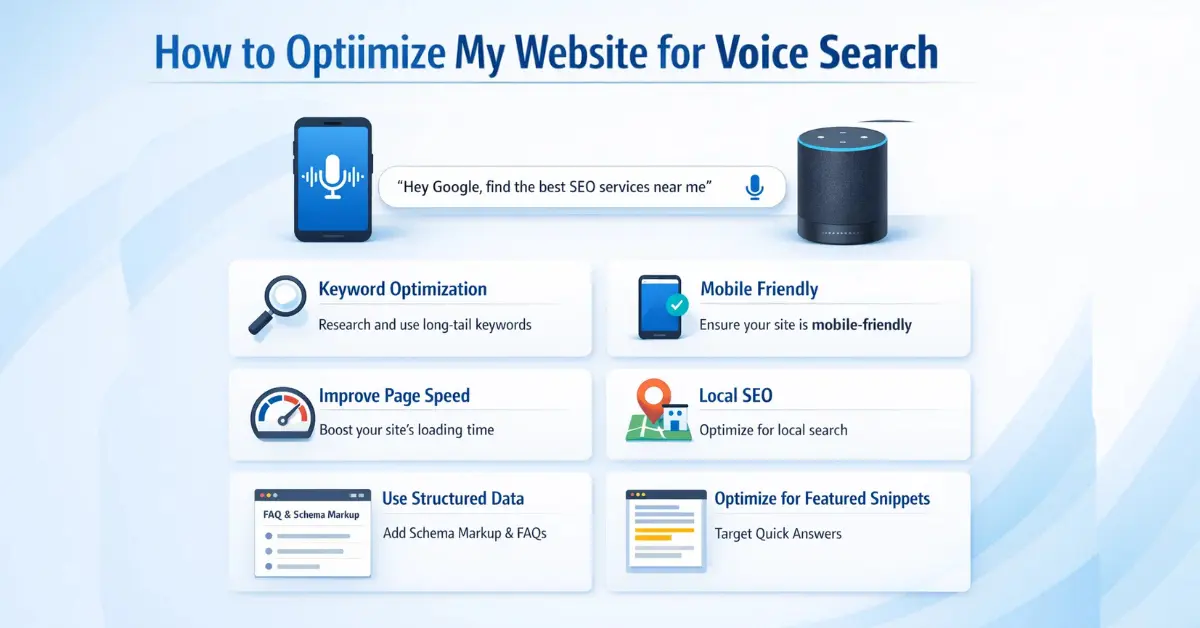
In my experience, I have seen how optimization strategies evolve with every major shift in user behavior. Voice search is one of the most significant changes, requiring businesses to adapt their websites to conversational queries, mobile responsiveness, and structured data. Below are the key strategies that ensure success in this new environment.
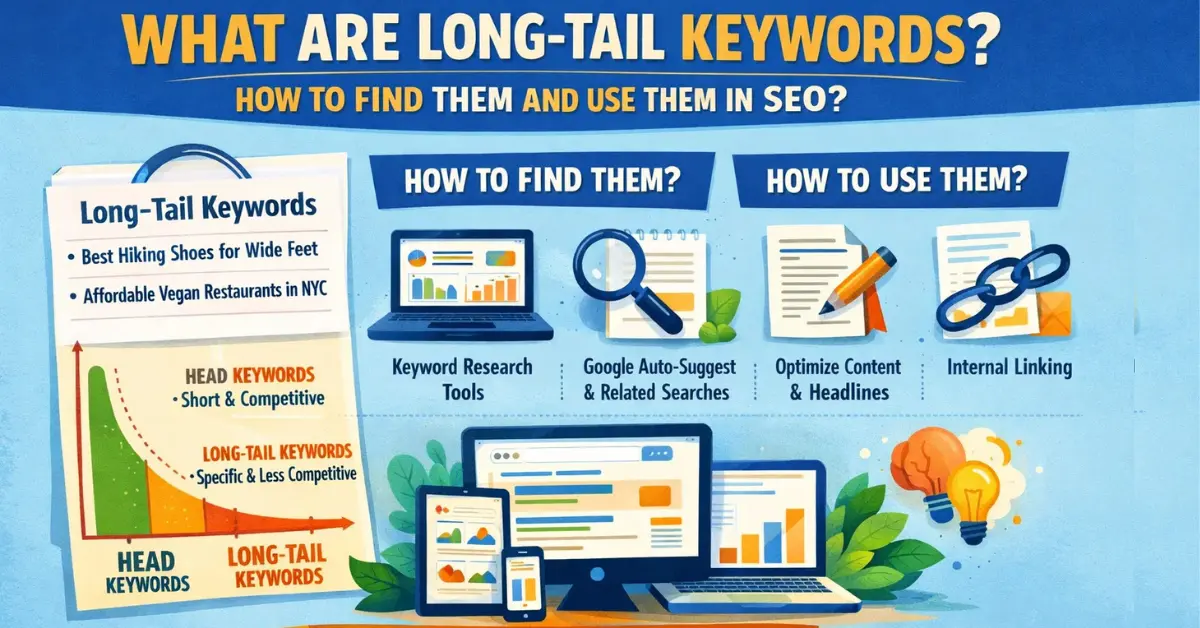
Focus on Conversational Keywords and Long Tail Queries
Voice queries are longer and more natural than typed searches. Optimizing for conversational keywords and question-based queries is essential. As per BrightLocal, 58% of consumers use voice search to find local business information, often phrased as full questions. My experience has shown that creating FAQ pages and content written in a conversational tone helps websites capture these queries effectively.
Optimize for Featured Snippets and Position Zero
Voice assistants often read answers directly from featured snippets. Securing position zero increases visibility and authority. As per SEMrush, over 40% of voice search answers come from featured snippets. Crafting concise, structured answers within your content improves the chances of being selected by search engines for voice responses.
Improve Page Speed and Mobile Responsiveness
Most voice searches occur on mobile devices, making speed and responsiveness critical. As per Google, 53% of mobile users abandon sites that take longer than three seconds to load. Over the years, I have seen businesses lose valuable traffic due to slow performance. Optimizing Core Web Vitals and ensuring mobile friendly design are non-negotiable for voice search success.
Ensure Structured Data and Schema Markup for Clarity
Schema markup helps search engines understand context and deliver precise answers. Adding structured data for FAQs, products, and local businesses improves visibility in voice search. As per Search Engine Watch, websites using schema markup see a 30% increase in click through rates. This clarity ensures that your content is easily interpreted by AI driven search assistants.
Strengthen Local SEO with Google Business Profile Optimization
Voice search is heavily tied to local intent. Optimizing your Google Business Profile with accurate hours, reviews, and location data ensures visibility in “near me” searches. As per Think with Google, 76% of people who conduct a local search visit a business within 24 hours. My decades of experience confirm that businesses investing in local SEO consistently outperform competitors in voice driven queries.
Optimizing for voice search requires a blend of conversational content, technical precision, and local relevance. By focusing on these strategies, businesses can strengthen their authority, improve rankings, and capture high intent traffic in an increasingly voice driven digital landscape.
ROLE OF AI AND SEMANTIC SEARCH IN VOICE SEARCH OPTIMIZATION
In my professional career, I have experienced how artificial intelligence and semantic search have reshaped the way websites are optimized., these technologies are central to voice search, enabling search engines to interpret context, intent, and relationships between queries more effectively than ever before.
How AI Interprets Context and Intent in Voice Queries
Voice queries are often conversational and complex, requiring AI to understand not just keywords but the meaning behind them. As per McKinsey, AI powered search systems improve query interpretation accuracy by 35% compared to traditional keyword matching. My experience confirms that businesses leveraging AI driven insights are better positioned to capture high intent traffic because their content aligns with user needs rather than just search terms.
Importance of Semantic Optimization and Topic Clustering
Semantic optimization ensures that content is structured around topics rather than isolated keywords. Topic clustering allows websites to build authority by covering related queries comprehensively. As per Ahrefs, pages optimized with topic clusters generate 22% more organic traffic than those focused on single keywords. Over the years, I have seen that adopting semantic strategies helps websites rank for a wider range of queries, particularly in voice search where context matters most.
Integration with LLM Tools for Keyword Grouping
Large language models (LLMs) now play a crucial role in keyword grouping and clustering. They analyze relationships between queries, uncover semantic connections, and suggest content strategies that reflect user intent. As per Gartner, organizations using LLM powered keyword clustering report a 40% improvement in topical authority. From my professional experience, integrating LLM tools into SEO workflows allows businesses to stay ahead of algorithm changes and deliver content that resonates with both users and search engines.
AI and semantic search have revolutionized voice search optimization by focusing on context, intent, and topic relevance. By embracing conversational content, semantic clustering, and LLM powered keyword grouping, businesses can strengthen their authority, improve visibility, and achieve sustainable growth.
TECHNICAL SEO FOR VOICE SEARCH
In the recent years, I have noticed how technical optimization often determines whether a site succeeds or struggles in search rankings. Voice search adds another layer of complexity, requiring websites to be technically sound, fast, and structured for conversational queries.
Implement Schema Markup for FAQs and How To Content
Schema markup is essential for voice search because it helps search engines interpret context and deliver precise answers. FAQ and How To schema are particularly effective since voice assistants often respond to direct questions. As per Search Engine Land, websites implementing FAQ schema see up to a 25% increase in visibility for question based queries. In my experience, businesses that adopt schema early consistently secure featured snippets and position zero results, which are critical for voice search.
Optimize Core Web Vitals for Faster Responses
Speed is a ranking factor, and it is even more important for voice search where users expect instant answers. Core Web Vitals such as Largest Contentful Paint and First Input Delay must be optimized to ensure smooth performance. As per Google’s developer insights, sites meeting Core Web Vitals benchmarks experience 24% lower bounce rates. Over the years, I have seen that improving site speed not only boosts rankings but also enhances conversions, especially on mobile devices.
Ensure Secure and Mobile Friendly Site Architecture
Voice searches are predominantly mobile, making responsive design and secure architecture essential. HTTPS encryption builds trust, while mobile friendly layouts ensure accessibility. As per Think with Google, nearly 70% of voice searches are conducted on mobile devices, highlighting the importance of mobile readiness. From my professional experience, websites that prioritize mobile optimization and security consistently outperform competitors in voice driven search results.
Technical SEO for voice search requires precision and foresight. By implementing schema markup, optimizing Core Web Vitals, and ensuring secure mobile friendly architecture, businesses can strengthen their authority and capture high intent traffic. These steps are not optional; they are the foundation for success in a voice first digital world.
CONTENT OPTIMIZATION FOR VOICE SEARCH
Having worked in SEO for decades, I have seen how content strategies must evolve to match user behavior. Voice search has introduced a new dimension where conversational tone, natural language, and structured answers are essential for success.
Writing in a Conversational Style
Voice queries are framed as natural conversations rather than keyword strings. Content must reflect this by adopting a friendly, human like tone. As per Nielsen Norman Group, users are more likely to engage with content that mirrors spoken language patterns, which makes conversational writing a critical factor in voice search optimization. From my experience, businesses that shifted to conversational content early consistently achieved stronger rankings in voice driven results.
Creating FAQ Pages and Q&A Content
FAQ pages are highly effective because they directly address the question based nature of voice queries. Search engines often pull answers from structured Q&A formats. As per HubSpot, websites with FAQ sections see a 33% increase in featured snippet appearances, which are frequently used for voice assistant responses. Over the years, I have seen FAQ content become one of the most reliable ways to capture voice search traffic.
Using Natural Language That Mirrors Spoken Queries
Natural language optimization ensures that content aligns with how people actually speak. This includes using longer phrases, question words, and contextual answers. As per Adobe Digital Insights, voice queries are on average 3 times longer than typed queries, highlighting the need for content that reflects spoken language. My professional experience confirms that adopting natural phrasing not only improves voice search visibility but also enhances user engagement.
Content optimization for voice search requires a shift toward conversational writing, structured FAQ pages, and natural language. By embracing these strategies, businesses can strengthen their authority, improve visibility, and capture high intent traffic’s voice first digital environment.
TOOLS AND PLUGINS TO SUPPORT VOICE SEARCH OPTIMIZATION
In my experience, I realized how the right tools and plugins can transform optimization strategies. Voice search requires specialized support, and WordPress plugins, analytics platforms, and AI powered systems are now central to success.
WordPress SEO Plugins with Voice Search Features
Modern WordPress plugins such as Rank Math, Yoast SEO, and AIOSEO have evolved to include voice search friendly features. These plugins provide schema markup for FAQs, conversational keyword suggestions, and structured data integration. As per WPBeginner, plugins with voice search modules improve featured snippet visibility by 27%, which is making them essential for capturing spoken queries. My experience confirms that businesses using these plugins gain a competitive edge in local and mobile voice searches.
Analytics Tools to Track Voice Query Performance
Tracking performance is critical to refining strategies. Tools like Google Search Console and SEMrush now provide insights into voice query traffic and question-based searches. As per Search Engine Journal, sites that monitor voice query performance see a 20% higher improvement in rankings compared to those that ignore it. Over the years, I have seen that analytics driven adjustments consistently lead to stronger engagement and conversions.
AI Powered Content Recommendation Systems
AI powered systems are revolutionizing content optimization by analyzing user intent and suggesting conversational phrasing. These tools integrate with WordPress plugins to provide real time recommendations. As per McKinsey, AI driven content strategies increase organic traffic by 35% compared to traditional methods. From my professional experience, adopting AI powered recommendations ensures that content resonates with audiences while meeting search engine requirements.
Voice search optimization is supported by advanced plugins, analytics tools, and AI systems. By leveraging these resources, businesses can strengthen their authority, improve visibility, and capture high intent traffic across mobile and smart devices. These tools are no longer optional; they are the foundation of sustainable SEO success.
COMMON MISTAKES TO AVOID IN VOICE SEARCH OPTIMIZATION
Having worked in SEO for many years, I have seen many businesses struggle with voice search because they overlook fundamental principles. Avoiding common mistakes is essential to building authority, improving visibility, and ensuring long term success.
Overstuffing Keywords Instead of Focusing on Intent
One of the most frequent errors is overloading content with keywords rather than addressing user intent. Voice queries are conversational and often framed as questions, so keyword stuffing does not align with how people speak. As per Moz, content optimized for intent rather than keyword density achieves 32% higher engagement rates. From my experience, businesses that prioritize intent driven content consistently rank better in voice search results.
Ignoring Local SEO Signals
Voice search is heavily tied to local queries such as “restaurants near me” or “pharmacies open now.” Ignoring local SEO signals like Google Business Profile optimization, accurate NAP (name, address, phone) data, and customer reviews can severely limit visibility. As per BrightLocal, 76% of voice searches are related to local information. Over the years, I have seen businesses that invest in local SEO outperform competitors by capturing high intent traffic from nearby customers.
Neglecting Mobile Performance and Page Speed
Most voice searches occur on mobile devices, making speed and responsiveness critical. Neglecting mobile optimization leads to poor user experience and lost opportunities. As per Google’s Mobile Research, 53% of mobile users abandon sites that take longer than three seconds to load. My professional experience confirms that improving Core Web Vitals and ensuring mobile friendly design directly boosts rankings and conversions.
Voice search optimization requires precision and strategy. By avoiding keyword stuffing, strengthening local SEO signals, and prioritizing mobile performance, businesses can build trust, improve visibility, and capture valuable traffic. These steps are not optional; they are the foundation of sustainable SEO success.
CONCLUSION
Now, I can confidently say that voice search is no longer a trend but a fundamental part of digital marketing. Optimizing for voice queries is essential because user behavior has shifted toward conversational interactions, mobile accessibility, and instant answers. As per Statista, over 50% of global internet users now rely on voice assistants for daily searches, proving that businesses must adapt to remain visible and competitive.
Voice search impacts every aspect of SEO, from keyword strategy to technical performance. It emphasizes natural language, local intent, and structured data. My experience has shown that companies embracing voice search early consistently outperform competitors in rankings, conversions, and customer engagement.
Success in voice search requires continuous testing and refinement. Implementing conversational content, optimizing for featured snippets, and strengthening local SEO are not one-time tasks but ongoing processes. As per HubSpot, businesses that regularly refine their SEO strategies achieve 30% higher growth in organic traffic compared to static approaches. Applying these strategies ensures long term sustainability.
Frequently Asked Questions
1. What is voice search and how does it impact SEO?
Voice search enables users to search the internet using spoken commands through devices such as smartphones and smart speakers. It impacts SEO by prioritizing conversational queries, featured snippets, structured data, natural language content, and mobile optimization to deliver quick and precise answers.
2. Why is voice search important for local SEO?
Voice search is widely used for location specific queries such as finding nearby services, checking business hours, or locating products. Optimizing Google Business Profile, maintaining accurate local listings, and implementing local schema markup improves visibility for high intent local searches.
3. How are voice queries different from typed searches?
Voice queries are typically longer, more conversational, and structured as full questions. Unlike short typed keywords, voice searches focus on intent, context, and natural language patterns, requiring content to align with how users actually speak.
4. What are the key strategies to optimize for voice search?
Key strategies include targeting conversational and long tail keywords, optimizing for featured snippets, implementing FAQ schema, improving Core Web Vitals, ensuring mobile responsiveness, and strengthening local SEO signals.
5. How does AI and semantic search influence voice search optimization?
AI and semantic search allow search engines to interpret context and user intent instead of relying only on keywords. Topic clustering, structured data, and semantically optimized content improve authority and visibility in voice driven search results.